


In 2018, Africa is expected to register sales of new 2.1 million cars with major auto players such as Toyota, Tata Motors and General Motors GM -0.91% looking at the continent for growth opportunities. There are approximately 21.6 million passenger vehicles operating in Africa; making the continent’s nearly 1.2 billion population a very attractive prospect for global automobile manufacturers to penetrate. Not to be left out of the lucrative market, African entrepreneurs are now entering the automobile industry; designing and developing vehicles specifically geared for the local market and local consumers but with global aspirations. Sub-Saharan Africa is projected to remain one of the fastest growing regions in the world. While Africa’s economy is soaring past most regions with an annual growth of about 5% due mainly to increased agriculture production, infrastructure investment including transportation, ports and energy as well as buoyant services led by tourism, telecommunications and financial services, the continent’s middle class is expected to swell to approximately 300 million people. Additionally, the World Bank projects private consumption in the region to remain strong in 2018-19; particularly with the continent’s burgeoning middle class looking to splurge on new passenger vehicles and for most, their first such purchase. Here are three African automobile manufacturing companies that are developing “made in Africa” vehicles that look the most promising for the African consumer market; Kiira Motors Corporation, Uganda Originally developed by students from Uganda’s Makerere University for a project headed by Massachusetts Institute of Technology (MIT), the sedan hybrid electric vehicle called the Kiira EV SMACK was designed for the region, local terrain and consumers’ ability to afford the car. The five-seater sedan is powered by a rechargeable battery and also has an internal combustion engine-based generator which charges the battery. The first commercial vehicle from this line is expected to rollout in 2018 Innoson Vehicle Manufacturing Company, Nigeria The domestic vehicle maker Innoson Vehicle Manufacturing Company has built on its success of manufacturing buses and trucks to launch a passenger car line comprised of a truck (IVM 1021A) and a Sports Utility Vehicle (IVM 6490A). According to the company website, the automobile company was commissioned by President Goodluck Jonathan and founded by Mr. Innocent Chukwuma. Kantanka Automobile Company, Ghana The Ghanaian based automobile company founded by Apostle Safo Kantanka, assembles its passenger vehicles (mainly SUVs and pickup trucks) at the company’s manufacturing plant located in Gomoa Mpota in the central region of Ghana. The automobile company has reportedly pushed back commercial release of its models pending approval from the Ghana Standards Authority. Low-cost cars in demand in Africa Indian and Chinese auto firms offering low-cost models are expanding their African reach. India’s Tata Motors, which is currently focusing particularly on the South African market, aims to quadruple its sales in the country by 2018 – both in terms of combined passenger vehicles and light commercial vehicles. It sold 6,500 units in 2012 but wants to bring this up to 30,000 by 2018. In order to achieve this, Tata plans to more than double its number of Associated Motor Holdings outlets from 48 to 100 in 2018. The company is due to diversify its product range in South Africa, introducing new models such as Tata Aria, Tata Prima and Tata Ultra Trucks. At the same time, the Chinese automobile firm, Foton, has become the dominant Chinese car exporter to Africa. In 2015, Foton delivered 25,000 vehicles to the region – from cars to pick-up tricks. Although interest in Africa is rising, the current market figures are mixed. In Nigeria, Africa’s most populous country, where 50,000 new vehicles enter the country every year, according to the Oxford Business Group, sales dipped by 4.5% in 2015. The negative trend was attributed to sectarian violence, flooding and a floundering economy. Analysts predict that Nigeria’s auto market will recover strongly in 2017, with sales rising by 5.5%. Ford also announced its intention to launch four new models in Nigeria – the Focus, Fusion, Escape and Ranger. Honda, which until recently has focused on the motorcycle market in Nigeria, has also announced that it plans to sell cars in the country. In countries reaping the benefits of new-found mineral and resource wealth, demand for vehicles is robust. In Zambia, with its flourishing copper mining industry, the sale of new vehicles is predicted to double between 2016 and 2020. With the infrastructure sector in the country also growing, due to a $6.5bn investment programme, the demand for commercial vehicles is also set to grow. A similar trend marks the auto sector in Mozambique. The southern African country is thriving on the back of a coal boom and set to enjoy a new wave of investment due to the discovery of considerable natural gas reserves. An infrastructure boom in Mozambique will similarly drive up demand for commercial vehicles. Trends are positive in stable African economies as well. The Kenya Motor Industry Association recorded an increase in new vehicle sales in 2015. In Uganda, the number of newly registered vehicles spiked over 30% year on year in the first 11 months of 2016. Commercial vehicles were at the centre of this positive growth, while new vehicles sales are predicted to increase by 14% between 2016 and 2021. On a continent where disposable income, although rising, remains constrained, the used car market will continue to exert considerable pressure on the new vehicles market. Nigeria imports around 300,000 second-hand vehicles annually. According to the Japan Used Motor Vehicle Exporters Association, Japan alone exported 26,000 ‘pre-loved’ cars to the country in 2017.
Nigeria can become a leading automotive hub in Africa by 2050 with an increase in local production and an expansion in new car markets. Currently, the Nigeria auto market has been saturated by imported used cars (Tokunbos) which were popular among the middle class due to flexible pricing compared to imported new cars but the expected spike in local production suggests that the importation of used cars will be curtailed by 2034. Nigeria’s annual new car market currently stands at over 50,000 but with projected growth, it can rise to as much 7.6 million in 2050. Nigerians are expected to import as many as 335,000 used cars in 2017, also known locally as ‘Tokunbos’, as well as 90,000 new cars. But just about 35,000 cars will be assembled locally. This means that locally assembled cars account for roughly 15% of total car sales in Nigeria. However, this number could rise to 70% by 2050. In recent years, papid GDP growth in Nigeria will visibly impact Nigeria's auto market. But GDP growth was not the sole condition necessary for the automobile industry to boom. With 63% of Nigerians unable to afford a car without some form of financial support, facilitating access to vehicle financing loans is also important. Last year, less than a third of all new cars sold in Nigeria, were sold to retail customers. One of the biggest barriers for the Nigeria auto market is lack of credit. Most of the economies do not sell cars through a cash basis but they buy through borrowing, this needs to be addressed in Nigeria. Similarly, the challenge with porous borders which allow car smuggling must be addressed to ensure that local production is protected. Tightening borders and regulating importation of cheap used cars will help Nigeria conserve foreign exchange as its annual car imports value – half of which is believed to be smuggled – stands at approximately $3.3 billion. One of the key reasons for the progress in the growth of the local automotive industry is the National Automotive Industry Development Plan, an automotive policy announced by the government of Nigeria. The policy has already attracted interest and investment to Nigeria’s auto market as 30 car brands have obtained licenses to start assembly of cars in Nigeria but its implementation must remain enforced to allow for consistent growth. The government has already awarded licences for 14 new vehicle assembly plants. Names included Toyota, Honda, General Appliances West Africa and Nigeria-China Manufacturing Company. Nigeria Auto Market: Africa's Largest Nigeria’s auto market remains the largest in Africa, and the buying power of her middle class is increasing exponentially thus, presenting a huge opportunity in terms of consumption of auto products. This is despite infrastructure challenges, the President/CEO Sub Saharan African Region, Ford Motor Company, Jeff Nemeth has said. The company plans to launch at least 30 new vehicles by 2020 in Middle East & Africa with the ambition to corner 50 per cent of the Nigeria auto market. The company’s Semi-knocked Down (SKD) vehicle assembly line in Nigeria with strategic partnership with local Ford dealer group Coscharis Motors Limited is located in Ikeja, Lagos. The Lagos assembly line accommodates one shift and produces an 10 units per day, while a gradually expansion is being planned over time. Mitsubishi is also eyeing Nigeria auto market and is in early stages of its planning and negotiations with Nigerian stakeholders. The arrival of Chinese brands, and the pace at which Nigeria’s automotive hub is developing, is attracting other car manufacturers to Nigeria. Toyota has invested R6.1 billion in their Durban plant, BMW is set to invest R6 billion in their Rosslyn plant, VW has earmarked 4.5 billion investment for their Uitenhage plant and Ford R2.5 billion in their Rosslyn plant, with Mercedes Benz investing R3 billion in their East London plant in 2013/14. On the other hand, the trucking business in Nigeria has been expanding recently. As the rail system in Nigeria has collapsed, trucking has become increasingly important and lucrative, especially given the country’s favourable demographics in terms of population (which is over 168 million) and growth rate (which is currently around 6.8%). The growth of some industries, including in the petroleum and agriculture sectors and which are based on transport, has also raised demand for trucks. Trucking is an important component of the movement of goods to and from cities like Port Harcourt, Lagos, Abuja, Kaduna and Kano. Africa Automotive Directory The African Automotive Directory compiled by Africa Business Pages has emerged as a helpful resource for those looking for buyers of automotive spare parts in Africa. The Africa Automotive Directory lists all major auto parts importers in 49 African countries and is available for immediate download in Excel format. This special directory is updated every six months is available for sale at the Africa Business Pages B2B portal at a nominal cost of US$350. The Africa Automotive Directory has helped many exporters, manufacturers and dealers of automotive spare parts connect with their business counterparts in the African markets and develop direct business relations and expand their sales and distribution network in key African markets.
Africa is predominantly a price-sensitive market and consumers in the tyre market of Africa prefer imported low-priced Chinese tyres rather than the expensive European and American brands. Not surprising then that China has emerged as a leading exporter of tyres to many African countries in recent times. This has led to intense, competition between tyre manufacturers who are seeking to capture a major share of the market for tyres in the African markets. Till a few years back, European tyre manufacturers had a monopoly over the African markets and many European brands were top-selling tyres in most African countries. However, there has been a shift in the balance in recent years. Chinese and Asian-make tyres are now pushing the European and American tyre brands out of the market. The African continent has emerged as one of the fastest growing markets for the global tyre industry. The reason is simple: the rapid growth of the middle-class in many African countries has pushed demand for automobiles to an all-time high – in turn creating a growing market for all kinds of tyres, including passenger car tyres, off-the-road tyres, industrial tyres, agricultural tyres, truck, bus and trailer tyres as well as motorcycle and bicycle tyres. THE MARKET FOR TYRES IN EAST AFRICA In tyre market of East Africa, the American and European brands have been virtually wiped out. In Kenya, for instance, the American and European tyre brands are facing an uphill task, having to tackle a significant bulk of low-priced imports from China, Indonesia, Thailand and India. There is also the problem of taxation. Tyres attract a duty of 35 per cent in Kenya which, according to business analysts, should place the prices of imported and locally manufactured tyres roughly at par, with only marginal price variations on some brands. However, international tyre manufacturers say retail and wholesale prices of some foreign products in the market are well below the expected minimum if costs of production, transport, insurance and duty are considered, an indication that there is illegal dumping. THE TYRE MARKET IN SOUTH AFRICA Against this backdrop, the forecast for the South Africa tyre market looks positive. According to industry experts, the country’s tyre industry is set to grow by approximately 9 per cent by 2019 – a considerable growth performance time of economic hardship. This growth is going to be largely due to the various trade agreements which has helped to promote South Africa as an innovative manufacturing base for automotive products, including tyres. To further consolidate its position, South Africa launched APDP – Automotive Production and Development Program – in order to fully support the country’s overall tyre manufacturing facilities and capabilities. NEW DEVELOPMENTS Meanwhile, a recent development has been a significant all-cash overseas deal worth about US$ 80 million with the board of directors of Apollo Tyres Ltd. (ATL) approving the acquisition of the Durban-headquartered Dunlop Tyres International (Pty) Ltd (Dunlop South Africa). The 100 per cent equity buyout transaction, subject to regulatory approvals in both countries, would enable the USD 726 million ATL to secure a toehold in the fast growing Africa region and also a strong presence in the South African tyre market. Apart from Dunlop South Africa, the other three significant players in the South African market are Continental, Bridgestone and Goodyear. All the four players enjoyed nearly equal market share.
So Many People, So Little Land
folder_open Market Reports
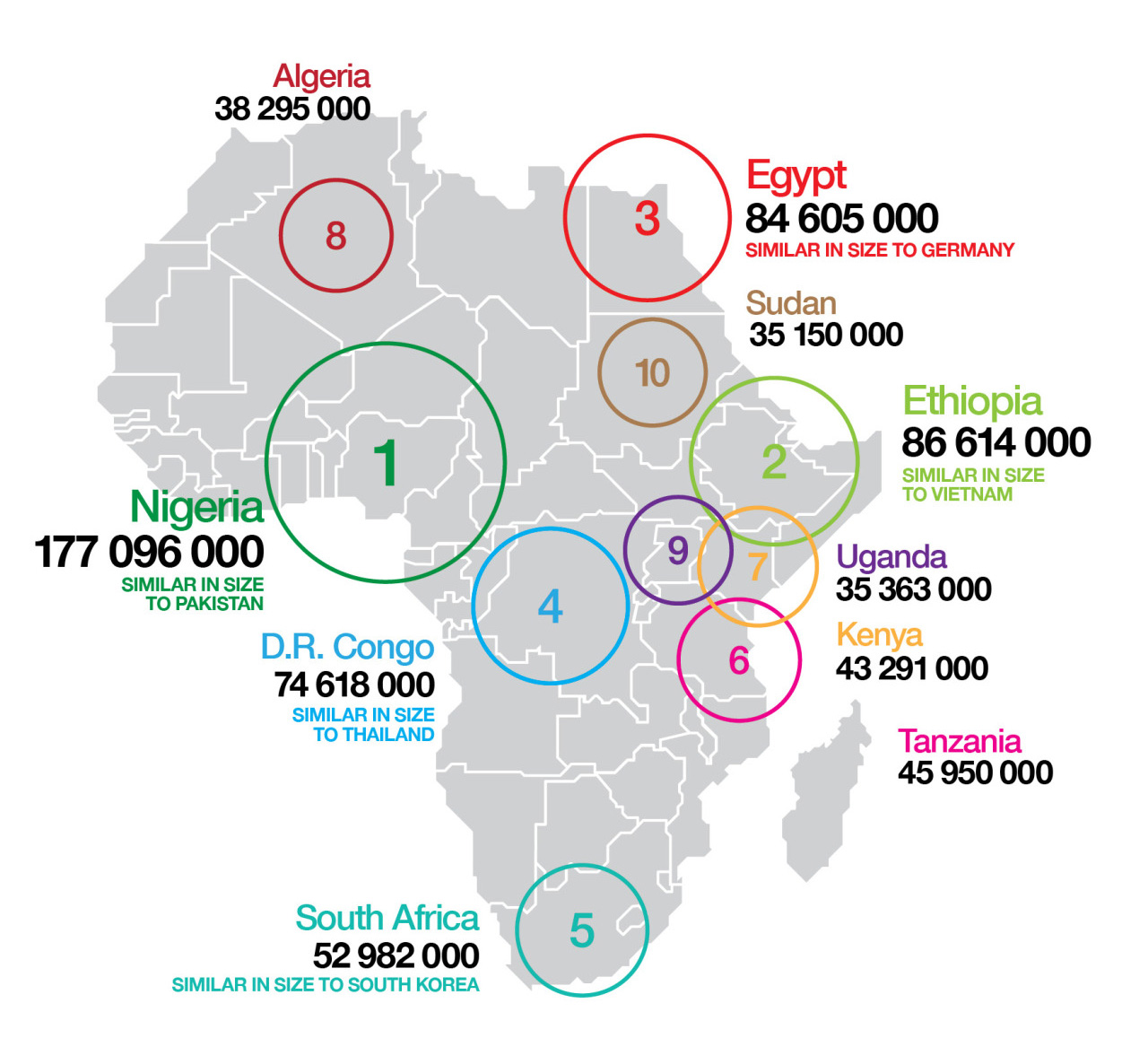
As drought and famine threaten millions of lives in the horn of Africa, global food security — or rather insecurity — is at the forefront of development discourse. What’s more, Harvard University demographers forecast last week that before the end of the year, the world’s population will reach 7 billion. In light of these daunting statistics and what the United Nations is calling “the worst humanitarian disaster in the world,” one cannot help but wonder: how will the planet continue to feed itself? To find an answer, international aid agencies are searching for the roots of famine. Some problems contribute more directly to food shortages than others — in the case of East Africa, climate change is severely restricting crop yields and driving up prices. Studies show that crop-killing droughts in Somalia have become more frequent and long-lasting over the past fifty years. From 1950 to 1970, they came roughly once every seven years. Since 2000, Somalia has suffered three major droughts. But as the world grapples with and tries to learn from the East African famine, experts are arguing that food shortages and high prices in the developing world are also attributable to a lower-profile issue: irresponsible land use. For instance, in recent years the Ethiopian and Kenyan governments have evicted local farmers to sell their land to agribusinesses from China and India. While these sales generate governmental revenue, the agribusinesses generally produce solely for foreign markets and leave local food markets strained. A report by the International Food Policy Research Institute announced that between 15 and 20 million hectares of farmland in Sub-Saharan Africa were sold to foreign interests between 2006 and 2009. Another hot-button land issue in the developing world stems from the expansion of the global biofuels industry. In another type of land deal, governments are leasing available farmland to biofuel plants, forgoing traditional agricultural production and driving up food prices both locally and globally. During the international food crisis of 2008, for example, the IMF estimated that increased biofuel demand accounted for 70 percent of global corn price increases and 40 percent of soybean price increases. So while land deals provide income for developing nations, unless that income is re-invested in infrastructural or agricultural development (which it often isn’t), they may leave populations vulnerable to famine during emergencies like the East African drought. To combat short-term thinking and its adverse effects, we have to demonstrate the benefits of long-term investment in responsible land use. CI is making the case for sustainability as a top priority in field program countries through participatory land use planning, a process which encourages local input in determining the best use of land from both conservation and economic perspectives. To put the food security issue in perspective, Harvard’s research predicted that 97 percent of the projected population increase of 2.3 billion over the next half-century will occur in underdeveloped nations. The population may be surging, but we have a fixed amount of land to work with. Managing it with a short-term mindset only creates problems down the road. We have a lot of work to do — 2050 is just two generations away.
The future of Africa in 6 charts
folder_open Market Reports
The last large source of arable land, minerals and fossil fuels, Africa may also be the continent that is the least-equipped to manage and protect its resources sustainably. If pursued with nature’s value in mind, Africa’s growth could mean long-term prosperity for its people; if not, it could bring unsustainable consumption, resource extraction and environmental degradation. Here are some of the changes facing the continent. 1. There are more Africans than ever before. 2. In 2014, one in six people on Earth were African. By 2030, it will be one in five. Africa’s population is projected to more than double by 2060, with 300 million new babies born just between 2015 and 2030. More mouths to feed will put increasing pressure on the continent’s agricultural production, which is already failing to provide enough food for Africa’s current population amid challenges like drought, insufficient financing and lack of infrastructure connecting sellers and buyers. More than half of the African population — and an even higher percentage in East Africa — is dependent on agriculture for at least part of their livelihoods, which means that changes to agricultural productivity would have widespread impacts. Of the world’s 20 countries most vulnerable to agricultural production loss due to climate change, 11 are in Africa. Given the importance of pollination, freshwater provision and other natural systems that make food production possible, implementing sustainable agricultural practices that increase productivity without depleting nature are critical. Conservation International (CI) led the development of a web-based monitoring system called Vital Signs to do just that; by providing diagnostic tools and near real-time data on factors such as precipitation and soil health, the system helps farmers and governments adapt their practices to changing weather patterns. 3. Africa’s workforce is growing faster than any other continent. While this shift reveals the potential of Africa to take a larger role in the global economy, having people ready to work isn’t enough. Michael O-Brien-Onyeka, senior vice president of CI’s Africa field division, explains: “By 2050, one in every four workers in the world will be from Africa — but I’m not sure if all of them will have jobs.” In order for those jobs to be sustainable long term, they must reflect a new economy that accounts for nature’s value. If Africa’s economic growth continues at the cost of its “natural capital” — that is, the forests, fresh water, soil, wildlife and other elements of nature that its people rely on — the continent’s future as a global leader will be in jeopardy. 4. Almost half of Africans live in cities. To much of the world, Africa is synonymous with wildlife — but many Africans have never seen a wild giraffe or elephant. As the growing population of mainly young people migrates to cities in search of work, economists are asking the question: Will urbanization in Africa solve any of its economic problems? Cities offer “investment, innovation, skilled labor, and higher incomes”; for many countries, they’re the hallmark of development. But cities can also bring “congestion, the creation of slums, worsening air quality, floods and inadequate sanitation, and joblessness arising from migration from poor rural communities to urban centers ill-equipped to receive them.” Which direction will dominate Africa’s cities? It will depend on the development path its countries choose. 5. Africa’s middle class is growing fast. A rising middle class is good news for the economy — and the newly affluent members of that group. But too often it goes hand in hand with overconsumption and a host of environmental issues that affect human health, the long-term availability of natural resources and ultimately, economic stability. In places like China, which is projected to overtake the United States as the world’s largest economic power, the short-term economic gains of a rapidly rising middle class — and its spending habits — have come with serious environmental ramifications like deforestation and increased carbon emissions from more cars on the road. 6. Half of the world’s 12 fastest-growing economies are in Africa. What can be done? For Africa to manage its resources for future generations, it will have to account for the value of its “natural capital,” as it does its financial and human capital. The Gaborone Declaration for Sustainability in Africa, a 10-country consortium spearheaded by Botswana, offers a model for bringing the value of natural resources into economic decision-making.
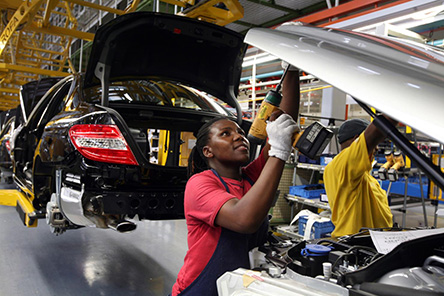
Sales of new cars in South Africa has been on the decline due to low business confidence and the expected increase in taxes in this years' budget that is likely to further erode real purchasing power. The latest data from the National Association of Automobile Manufacturers of South Africa (NAAMSA) shows that the decline in new vehicle sales has continued since December 2016. A total of 41,639 vehicles were sold in December 2016, a year-on-year decline of 15.3%. New vehicle sales for the year are down 11.4%, ending the year on 547 442 units; the lowest levels seen since 2010. Will 2017 see the local auto industry recover? Will car prices drop or rise? What about vehicle exports? Naamsa answers these questions and more below: What are 2018 vehicle sales expectations? "2018 is expected to be another difficult year for the domestic SA auto industry, however, a modest improvement in new vehicle sales is expected during the second half of the year," reports the Naamsa. Industry production levels, on the back of expected further growth in vehicle exports, should however remain in an upward phase. Naamsa says its 2018 projections for South Africa reflect an expected improvement in GDP growth to around 1.5% (from 0.4% in 2017). Local political tensions are likely to reduce business confidence and the expected increase in taxes in this years' budget will erode real purchasing power. Internationally, volatile and uncertain conditions are likely to prevail during 2018. SA car exports to remain strong Despite these considerations, the global economic outlook at this stage, remains positive and should continue to lend support to South Africa's improving vehicle export performance. Ultimately, industry vehicle exports would remain a function of the performance and direction of global markets. Naamsa said: "Vehicle exports to Europe, Australasia, the United States, Asia and South America were expected to show further upward momentum." Local car sales to 'remain flat' The general expectation in the industry is that domestic new vehicle sales will remain fairly flat going into 2017. Naamsa remains hopeful, however, that on the back of the expected improvement in key economic indicators, domestic sales would regain some traction in the second half of 2017 with year over year growth perhaps settling in the 2.5% to 3.5% range and hold to around that level going forward. Factoring in the expected improvement in exports, domestic production of motor vehicles in South Africa was expected to show an increase from 604,000 vehicles produced in 2016 to close on 641,000 vehicles in 2017– an improvement in vehicle production of about 6.0% This figure could prove conservative if vehicle exports expand more than currently anticipated. The projected higher vehicle production was consistent with the official vision for the Industry which is to remain a premier supplier of high quality, competitive automotive original equipment parts and accessories and vehicles to international markets and, in the process, to achieve an annual domestic vehicle production figure of close to 850,000 vehicles by 2020. New models, self-driving cars Internationally and domestically, vehicle manufacturers would continue to focus on new models and products through sustained investment and new technologies. Technologies such as artificial intelligence could begin to reflect a tangible impact across sectors. Autonomous vehicles and driver assisted automatic systems as well as increased use of information technology in vehicles were likely to feature in the future. South Africa’s new vehicle industry grew 2.1% in March 2017, with total sales of 48 534 vehicles according to the latest data from the National Association of Automobile Manufacturers of South Africa (Naamsa). This follows a minor decline of 0.1% in February and growth of 3.7% in January. New vehicle sales, year-to-date, are up 1.9%. Match 2017: Spending money confidently In March 2017, out of the total reported industry sales of 48,534 vehicles, an estimated 42,772 units or 88.1% represented dealer sales, 6.7% represented sales to the vehicle rental Industry, 3.0% government and 2.2% industry corporate fleets. Domestic sales of industry new light commercial vehicles (LCVs), bakkies and mini buses at 14,882 units during March 2017 reflected a marginal improvement of 169 units or a gain of 1.1% compared to the 14 713 light commercial vehicles sold during the corresponding month last year. Rudolf Mahoney, head of brand and communications at WesBank, said: “March’s sales performance is indicative of the positive sentiment in the economy during the past month. There were a few contributing factors, including a strong Rand and falling fuel prices. "Consumers had many reasons to feel confident enough to spend money, and this is immediately evident in the new vehicle sales.” This sales performance and consumer confidence is reflected in the demand for vehicle finance. WesBank says its internal data shows growth of 8% for new vehicle finance, compared to March 2016. This past month also saw the average new vehicle price reach an all-time high, representing an 8% increase year-on-year. The strong demand for new vehicles was not at the expense of used vehicle sales, where application volumes were 13.4% higher than the same time last year. Consumers shopping in the used market during March were also spending 8.6% more on average, than last year. Mahoney concludes: “However, this positivity is going to be short-lived. The current political climate has introduced massive uncertainty in all South African markets. Both business and consumer confidence have been shaken, and this will filter through to the ratings agencies as well. The Rand’s sharp decline has already wiped out the benefit of lower fuel prices, and if it continues to deteriorate, new vehicle prices will follow suit.”
The Auto Parts Industry in India
folder_open Market Reports
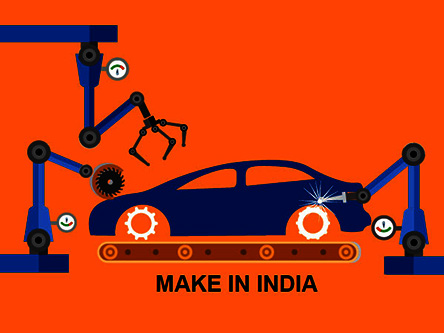
India is today known for being a reliable producer of high-value precision instruments for almost all major global automotive companies. India has strongly emerged as one of the most preferred destinations for manufacturing high quality auto components. The growth of global original equipment manufacturers (OEMs) sourcing from India and the increased indigenisation of global OEMs is turning the country into a preferred designing and manufacturing base. Factors like a stable government framework, increased purchasing power, large domestic market, presence of a large base of skilled and semi-skilled manpower and an ever-increasing development in infrastructure only add to India’s attractiveness as a global hub for manufacturing. While many major global OEMs have made India a component sourcing hub for their global operations, several global Tier-I suppliers have also announced plans to increase procurement from their Indian subsidiaries. India is also emerging as a sourcing hub for engine components, with OEMs increasingly setting up engine manufacturing units in the country. Indian auto-components industry is set to become the third largest by 2025. India offers a stable government framework, increased purchasing power and a large domestic market. India offers a large pool of skilled and semi-skilled workforce. Automobile and auto component industry are a key component of the flagship 'Make in India' programme. The auto component sector is a key component of the flagship 'Make in India' programme from the Government of India. The Indian auto component industry is expected to grow by 7-8% in FY 2018-19, due to higher localisation by OEMs, higher component content per vehicle, and rising exports from India. In fact, the industry is expected to register a turnover of US$ 100 billion by 2020. Indian Auto Parts Industry According to reports, the Indian automotive industry is expected to be among the top three in the world in the area of engineering, manufacturing export of vehicles and components by 2026. The industry aims to achieve five times growth with a turnover of US$ 200 billion, exports targets between US$ 70-80 billion and an investment of US$ 30-40 billion by 2026. The aftermarket segment is expected to grow at a CAGR of 10.5 per cent, and reach US$ 13 billion by 2019-20, from US$ 8.4 billion in 2016-17. As the manufacturing competencies available in the country are being utlised for developing components for the global market, the domestic market is going equally strong. The autocomponents industry accounts for almost seven per cent of India’s Gross Domestic Product (GDP) and employs as many as 19 million people, both directly and indirectly. Increased investments in R&D operations and laboratories, which are being set up to conduct activities such as analysis, simulation and engineering animations, are expected to further boost India’s position as a global supplier. – IBEF
Commercial vehicle market set for revival due to increased demand in Africa and Middle East markets
folder_open Market Reports
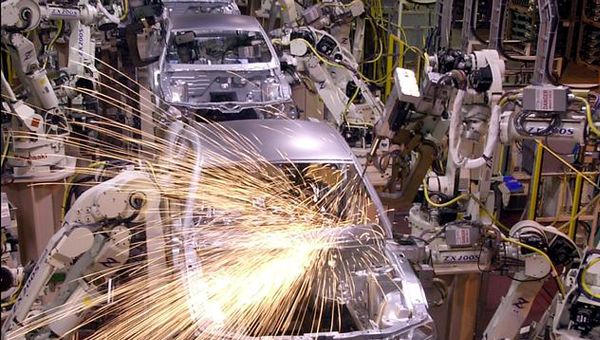
A concerted focus on infrastructure development paired with economic diversification is expected to revive the Gulf region's commercial vehicle market, providing impressive business opportunities for auto manufacturers and aftermarket sellers. According to a March 2017 report from analysts TechSci Research, approximately 240,000 commercial vehicles (CVs) were sold in the Gulf Cooperation Council (GCC) in 2016, including light, medium, and heavy trucks, vans, and buses. While that was down on the peak number of CVs sold over the last five years – 380,000 in 2014 – TechSci estimates a steady annual growth of trucks and buses on the region's roads from 2017-2022 of nearly three per cent and nine per cent respectively. Saudi Arabia, Oman and the UAE dominated GCC truck sales last year, comprising more than 80 per cent of the market, while over the last few years the region has emerged as one of the world's prominent bus importers on account of labour and staff transportation and luxury buses used during Hajj, the annual Islamic pilgrimage to Mecca in Saudi. Meanwhile, Frost & Sullivan, another analyst, estimates the region will be home to 1.8 million CVs by 2020, which in turn will fuel demand for CV parts and accessories, the value of which will reach US$5.6 billion. GCC countries, which are traditionally major exporters of oil and natural gas, are making a concerted effort of economic diversification, and verticals such as logistics, construction, tourism and public transport, accompanied by large-scale expansion of civic infrastructure projects, will fuel demand for commercial vehicles and aftermarket services. Saudi Arabia, Oman and the UAE dominated GCC truck sales last year, comprising more than 80 per cent of the market. Many of the Truck Competence exhibitors fall under the Parts & Components and Electronics & Systems sections at Automechanika Dubai. With more than 1,100 exhibitors combined, the two sections form the largest of the six dedicated product sections of the annual trade fair. ZF Group from Germany is a global leader in driveline and chassis technology for cars and commercial vehicles, and a prominent Truck Competence exhibitor at Automechanika Dubai. The Friedrichshafen-headquartered Company, which achieved sales of €35.2 billion in 2016, will for the first time in the Middle East, display its complete portfolio of PC and CV applications under the well-established product brands SACHS, LEMFÖRDER, TRW and Openmatics. "A significant portion of the Middle East passenger car and commercial vehicle population is equipped with ZF components," said Khalid Alexander Sabbah, Managing Director of ZF Services Middle East. French company SAE-SMB, a specialist manufacturer of axles, suspensions, and related spare parts for trailers, semi-trailers, low loaders, tankers, and forestry trailers. Davide Radrizzani, Managing Director of the French Branches for SAE, said the company has big plans for the Middle East and Africa, and hopes to get a gauge of the market. "Algeria, Morocco and Tunisia already represent about 30 per cent of our annual turnover, and over the next three years our strategy is to not just develop the sub-Saharan and West African markets, but also the Middle East," said Radrizzani. "The African automotive and truck business will be booming for the next 10 years and we want to be present for this new opportunity. We know that Dubai is the best hub to develop these markets, and we hope to get a clear picture of the wider region. It will be our first initiative before opening our branch office in Middle East as our next strategic step." Hastings Manufacturing from the USA is another Truck Competence exhibitor that is gearing up for more business growth in the Middle East and Africa. The Michigan Company has been a leader for more than 100 years in piston ring manufacturing for nearly any type of application, from automotive and truck, to agriculture, industrial, small engine, as well as marine and high performance engine applications. Romy Laxamana, Vice President of Business Development said: "The Middle East and African market is a very important part of the strategic growth plans for Hastings Manufacturing. Both of these markets present an opportunity for our company to expand our global reach by leveraging our technology and our brand to reach new customers in this region. "Historically, we've done business in the Middle East through USA based trading companies. The company recently pivoted to doing business directly with major regional importers and distributors to be closer to the customer and provide better service and competitive pricing."
The Market for Auto Parts in Ghana
folder_open Market Reports , West Africa
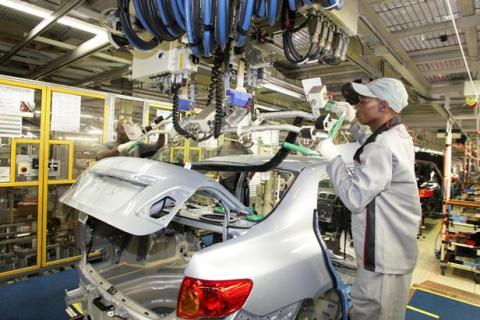
The market for auto parts in Ghana presents numerous opportunities. First and foremost, Ghana’s manufacturing industry has always been receiving good support from the local government. The encouragement and support of the Ghana government has enabled the country to emerge as one of the 40 fastest growing industrial production regions in the world. Ghana's impressive manufacturing industry currently accounts for a quarter of the country's GDP and is expected to account for more than 30% of the GDP by 2021. And the main driver for Ghana's booming manufacturing industry is the automobile industry. The automotive market in Ghana is diverse. It ranges from Original Equipment Manufacturers (OEMs) and component manufacturers, to dealerships and commercial vehicle manufacturers. Financial pressures, industry restructuring, changing consumer preferences, regulating issues, fluctuating fuel prices and the growing demand for more environmentally friendly vehicles are constantly transforming West Africa's automotive industry. The Ghanian automotive industry continues to adjust to market forces. The manufacturing level is being impacted by the increasing number of imported vehicles and the after affects of the global economic crisis, especially the uncertainty with regards to the European markets and the impact on local manufacturing. To survive and grow, automotive companies in Ghana must continuously develop and maintain customer relationships, achieve technical excellence and retain skilled labour pools, and manage significant risks. The automobile sector of Ghana has been a driver of growth of the country as it is one of the most visible sectors to receive foreign investment. Ghana is a multicultural and ethnically diverse West African nation and is the 9th largest African economy. On the Ibrahim Index of African Governance, Ghana ranks as the 7th best economy in Africa, which implies a relative safety of foreign investment in the region. Also, Ghana ranks relatively high in the ease of doing business index and also has an extremely high freedom of press rating, which makes it a good emerging market to invest in. Some of the popular car brands in the West Africa region are Toyota, Mercedes Benz, Mitsubishi, KIA, Nissan, Hyundai Volkswagen, Renault among others. AFRICAN AUTO PARTS INDUSTRY The African auto parts market for passenger vehicles is emerging as one of the most important re-export markets, growing more than 11 per cent year-on-year, and estimated to be worth US$14.68 billion in 2017 and based on the double-digit growth of demand in key Sub-Saharan countries, the value of the Africa’s auto parts market is likely to double by 2022. Countries such as Nigeria, Kenya, Uganda, Ghana, have witnessed double digit growth in demand of parts in the past five years. Focusing on the tremendous opportunities of doing business in the fast-emerging African market, there are currently more than 21.6 million cars on the continent’s roads which make up for nearly 70 per cent of spare parts consumption. There are five modes of automobile service business in Ghana, these are : New car dealers Independent garages/shops Specialty garages /shops Service stations or garages Fleet garages /shop However, the region still has its challenges. The African market is unstructured and the share of non-genuine parts is the biggest challenge to the automotive aftermarket in this region. Political issues, credit policies, and business sustainability related issues also impact the market, but these are mostly limited to Central Africa. Despite this the future outlook remained bright for those exporting to Africa, with the best opportunities existing in Kenya, Angola, Uganda, Nigeria and Ghana. Used engines are in great demand in many African countries which have a big market for re-conditioned automobiles. Most of the African buyers have substantial requirements for quantities of automotive batteries, tyres, spare parts, ball bearings, water pumps and a host of electronic goods. People prefer buying used spare parts because they are genuine and are often in good condition. Every spare parts outlet may not provide the full range of used parts of all car models but together the market is capable of providing nearly 90 per cent of such parts. The diversified range of used mechanical and body parts of cars and engines has brought this business parallel to genuine and non-genuine new spare parts businesses as it offers big variety at affordable prices. There has been an increasing demand for automobile spares, ball bearings and lubricants in the fast developing markets of Africa. The rapid growth of the middle class in many African countries has pushed demand for automobiles to an all-time high – in turn creating a growing market for all kinds of tyres: passenger car tyres, off-the-road tyres, industrial tyres, agricultural tyres, truck, bus and trailer tyres as well as motorcycle and bicycle tyres. The rising demand for tyres in Africa has led to stiff competition between tyre manufacturers from all across the world seeking to garner a major share of the market for tyres in the new and emerging African markets. Traditionally, European tyre manufactures had had a monopoly over the African markets and many European brands were top selling tyres in many African countries. However, in recent times, European tyre firms are beginning to lose ground to Chinese and other Asian brands in several African markets. The African countries are price-sensitive markets and prefer to import low-priced Chinese tyres rather than the expensive European and American brands. There is an equally strong market for sale and importation of used tyres in this region. Apart from Dunlop International the other three significant players in the African market for tyres are Continental, Bridgestone and Goodyear. Some of the major exporters of auto spare parts to Africa from Dubai include: Al Muqarram Auto Spare Parts Bagader Trading Est. BBG Trading VRB Trades FZE Zafco Trading Zeetex SPARE PARTS MARKET IN GHANA Currently most of the consumers in the automobile segment belong to the affluent class hence the automobile industry in Ghana presents massive opportunities for the future as the burgeoning middle class is largely untapped in the country. One of the major problems with Ghana that has been impeding the growth of the automobile sector is the lack of financial inclusion in the country. Most people do not have access to financial loans and other options like lease that make owning an automobile easy. The Africa Automotive Directory is a useful resource for those seeking importers of automotive spare parts in the African markets. Available for download in Excel format. While the global automotive industry is fiercely competitive, there are other factors that limit or even distort trade. For decades, various governments around the world have used trade distorting policies to support the creation and expansion of domestic automotive industries that were not otherwise economically feasible. This has been accomplished through combinations of subsidies, tariffs and non-tariff barriers. The market for automobile spare parts, in particular, has been an attractive sector for enterprises supplying these goods to many countries in Africa. The rapid industrialisation currently sweeping across many African countries has resulted in an increased demand for capital goods such as machinery, lubricants, spare parts, ball bearings and other mechanical accessories. The automobile sector of Ghana has been a driver of growth of the country as it is one of the most visible sectors to receive foreign investment. Indian automobiles major Mahindra and Mahindra, has invested heavily in the country and has made it as a regional hub for the manufacture of its Sports Utility Vehicles. Ghana’s first Ghanaian carmaker Kantanka Automobile Company says after years of vigorous research and tests it was now determined to release into the global market strong, robust, durable and reliable cars. The manufacturing base in Accra can currently produce around 100 cars a month. On the Ibrahim Index of African Governance, Ghana ranks as the 7th best economy in Africa, which implies a relative safety of foreign investment in the region. Also, Ghana ranks relatively high in the ease of doing business index and also has an extremely high freedom of press rating, which makes it a good emerging market to invest in. Moving forward, automotive companies must look for new ways to address existing challenges, mitigate risks, and seize future opportunities, amidst increasingly aggressive competition and pricing pressures. While some may be tempted to focus on short-term success to the detriment of long-term profitability, a holistic approach can help automotive companies take a big-picture view to explore the appropriate paths forward. Africa Automotive Directory The African Automotive Directory compiled by Africa Business Pages has emerged as a helpful resource for those looking for buyers of automotive spare parts in Africa. The Africa Automotive Directory lists all major auto parts importers in 49 African countries and is available for immediate download in Excel format. This special directory is updated every six months is available for sale at the Africa Business Pages B2B portal at a nominal cost of US$350. The Africa Automotive Directory has helped many exporters, manufacturers and dealers of automotive spare parts connect with their business counterparts in the African markets and develop direct business relations and expand their sales and distribution network in key African markets.
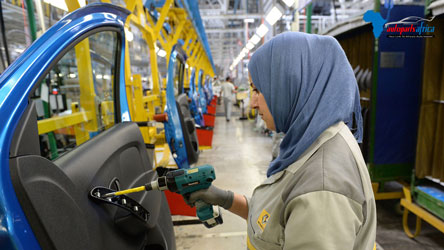
Before the end of next year, Morocco officials hope to announce the name of a third global automaker to build an assembly plant there. The unnamed manufacturer would launch production in the North African kingdom in 2021 or 2022, according to Khalid Qalam, senior adviser with Invest in Morocco. That third player would join Renault, which has two factories in Morocco, and PSA Group, which will begin building cars near the coastal city of Kenitra in 2019. But Morocco has even bigger plans for the industry. The country is working to recruit a fourth major automaker plant before the end of 2021, Qalam says, with production starting in 2023 or 2024. A fourth project would help the country reach its stated goal of having the capacity to build 1 million vehicles a year by 2025. “At that level, we believe Morocco will rank among the top 15 vehicle-producing countries in the world, and quite possibility even enter the top 10,” Qalam said. Officials are mindful of the shifting nature of global technologies, he adds. Morocco is encouraging its next vehicle manufacturer to produce a platform that allows it to manufacture both electrified vehicles and conventional models. Morocco’s pitch to world automakers is that it offers a low-cost base to produce models for export to Europe. But to help make EV production more attractive, Morocco will be providing consumer incentives to get local buyers to consider switching to models that fully or partially run on battery power. By 2025, Morocco wants annual sales of electrified vehicles to rise to 70,000 to 100,000 from small numbers today. The move to electrified transportation coincides with Morocco’s aim to become a major producer of solar power and to cover half of the country’s energy needs from alternatives such the sun, wind and biomass. The average wage in Morocco is less than 400 euros ($450) a year, compared to 2,000 euros just across the Mediterranean in Spain. The tax rate on companies is 0 percent for the first five years, and businesses are given a big break on value added tax. The country’s Tangier Med Port is already capable of processing 1 million vehicles a year. In addition, a high-speed rail line between Tangier and Casablanca is set to be operational in 2018. Africa Automotive Directory The research team at Auto Parts Africa has compiled a valuable database of automotive companies in Africa through painstaking work across more than 20 African countries. The result is the compilation of the first even Africa Automotive Directory which lists more than 17,000 automotive companies in Africa. This database of automotive-related companies in Africa lists wholesalers of automotive parts in Africa, auto parts dealers in Africa, auto parts retailers in Africa, auto parts suppliers in Africa, auto parts distributors, garages & service stations, Government Bodies, Automotive Associations as well manufacturers of auto parts in Africa. The Africa Automotive Directory is available for download here. Companies and exporters of auto parts from across the world have been using this database of automotive companies in Africa to reach potential buyers in Africa of auto parts and connect with importers of auto parts in Africa. This Directory contains the latest and complete information about your potential business partners in several cities across Africa. Listings of Top Companies Dealing in Auto Parts In MS Excel format Classified under different Trade Categories Up-to-date database of tyre dealers in Africa The database is well organised in an Excel sheet and the sortable fields include: Company Name, Address, Phone, Fax, Email, Website, Business Category.
Preliminary request for participation in the trade show
place
calendar_today
Preliminary request for visitor registration
Visitor Registration
place
calendar_today